


Study with me:
Biotechnical Processes
Bachelor Biotechnical Processes
This degree programme is taught in German.
Develop solutions for health, nutrition, medicine and the environment – with practical laboratory work from the very first semester. On this biotechnology degree programme, you’ll combine biology, chemistry and engineering and learn how to harness biological systems specifically for innovative applications. You’ll study in small groups in modern laboratories at HWN Tulln (formerly FHWN) – right at the heart of an internationally connected life sciences cluster.

Start where your questions begin.
Key facts about the degree programme
Content-
Academic degree
Bachelor of Science in Natural Sciences (BSc)
-
Duration
6 semesters (180 ECTS)
-
Organisation
full-time
-
Location
HWN Tulln
-
Language
German
-
Start
20.09.2027
-
Application date
05.10.2026 - 15.06.2027
-
Places available
60
Study schedule & fees.
Monday–Friday, 08:00–18:00 | 20 per cent online content/self-study
Detailed study plan for the Bachelor’s degree programme
ContentWhat you’ll learn on the Bachelor’s degree programme in Biotechnical Processes
During your biotechnology degree at HWN Tulln, you will not only learn the theoretical fundamentals, but also put them into practice. In state-of-the-art laboratories, you’ll work with a wide range of methods – used daily in research and industry – whilst you’re still studying. Step by step, you’ll build up the practical skills you need for biological analyses and biotechnological applications.
-
The biological and chemical foundations
In microbiology, chemistry and analytical science, you will learn how to culture microorganisms, analyse chemical and biological samples using modern analytical methods, and evaluate and document measurement results in a scientific manner.
-
Molecular tools
Learn about the structure of cells and how genes specifically control their processes. In the laboratory, you will isolate, amplify and analyse DNA, and detect genetic changes. Building on this, you will explore genetic engineering methods and their responsible applications in biotechnology.
-
Process and Biotechnology
Learn how biotechnology products are produced – from their extraction from microorganisms, through cleaning on a laboratory scale, to their preparation for analytical or preparative purposes. In the process, you will gain an insight into the development and optimisation of biotechnological processes.
-
Business, Law & Global Science
A successful bioprocess requires more than just laboratory work. You’ll learn how to plan projects, calculate costs and comply with regulatory quality and safety standards. At the same time, you’ll develop skills in scientific work and technical English. This will put you in the perfect position for the global biotech industry.
The Study Plan & the Course Descriptions
1. Semester
Course
ECTS
- General Chemistry
- General Chemistry Lab
- Applied Botany
- Discussing Biotechnology I
- Introduction to Biotechnology
- Mechanical Engineering
- Mechanical Engineering Tutorial
- Mathematics
- Crop Science
- Law
- Statistics
2. Semester
Course
ECTS
- Analytical Fundamentals
- Analytical Fundamentals Lab
- Applied Statistics
- Discussing Biotechnology II (E)
- Fundamentals of Economics
- Measurement, Control and Regulation Technology
- Microbiology
- Microbiology Lab
- Organic Chemistry
- Physics
- Mandatory Elective Job Application Training II (MEL)*
- Mandatory Elective Job Application Training I - Self Presentation (MEL)*
- Mandatory Elective First Aid in the Laboratory (MEL)*
- Mandatory Elective Communication (MEL)*
- Mandatory Elective Learning to Learn (MEL)*
- Mandatory Elective Facilitation (MEL)*
- Mandatory Elective Strategic Communication (MEL)*
3. Semester
Course
ECTS
- Applied Microbiology
- Natural Products Chemistry
- Fermentation Lab
- Genetics and Cell Biology
- Organic Chemistry Lab
- Presenting Research (E)
- Spectroscopy I
- Statistical Experimental Design
- Process Engineering
- Mandatory Elective Job Application Training II (MEL)*
- Mandatory Elective Job Application Training I - Self Presentation (MEL)*
- Mandatory Elective First Aid in the Laboratory (MEL)*
- Mandatory Elective Communication (MEL)*
- Mandatory Elective Learning to Learn (MEL)*
- Mandatory Elective Facilitation (MEL)*
- Mandatory Elective Strategic Communication (MEL)*
4. Semester
Course
ECTS
- Waste Management
- Applied Microbiology Lab
- Biochemistry
- Biotechnology
- Industrial Practice
- Cost Accounting
- Professional Tasks (E)
- Project Management
- Quality Management
- Spectroscopy II
- Statistical Methods in Analytical Chemistry
5. Semester
Course
ECTS
- Biorefinery
- Genetic Engineering
- Genetic Engineering Lab
- QA in Analytics
- Scientific Writing (E)
- Safety Guidelines
- Plant-based Raw Materials Technology
- Separation Techniques in Analytics
- Mandatory Elective 'Waste Manager' (MEL)*
- Mandatory Elective 'Project Manager' (MEL)*
- Mandatory Elective 'Quality Manager' (MEL)*
- Mandatory Elective 'Specialisation'
6. Semester
Course
ECTS
- Bachelor's Thesis
- Bachelor's Seminar
- Internship
Theoptionalmodules available in the 5th semester are bioplastics, natural cosmetics and food analysis.
What additional qualifications the Bachelor’s degree programme offers you
During your degree, you will have the opportunity to gain additional certificates and broaden your professional profile. These include:
-

pma/IPMA® Project Management Certification As a student at Wiener Neustadt University of Applied Sciences, you can obtain an internationally recognised pma/IPMA® project management certification in addition to your degree – recognised proof of project management competence and a clear advantage in any job application. The certification is an optional extra offered as an elective module. The HWN offers a dedicated preparation course to help you prepare specifically for the exam. You’ll sit the certification exam at pma (Projekt Management Austria). As HWN is a corporate member of pma, you’ll benefit from a reduced fee.
-

Waste management officer Certificate in accordance with the requirements of the Federal Ministry of Agriculture and Forestry, Climate and Environmental Protection, Regions and Water Management (BMLUK)
-

Quality Officer Certificate from Quality Austria
Who you’ll be working with on the Biotechnical Processes degree programme
At HWN Tulln on the Biotech Campus Tulln, you’ll be part of the biotech network. You’ll be in direct contact with your lecturers and experts from the worlds of research and industry, working in small groups on practical, up-to-date issues. Through projects, work placements and your bachelor's thesis, you’ll forge valuable contacts for your future career.
Testimonials from students
-
-
Inside Biotechnical Processes – An Overview of the Degree Programme
-
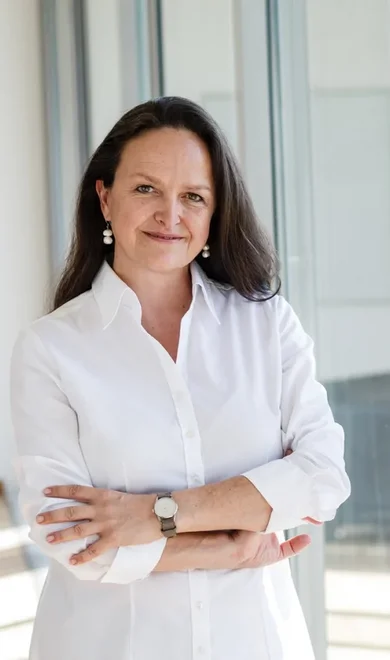
“I was fascinated by biology even at school. It was important to me not just to learn the theory, but also to gain practical experience in the laboratory. Tulln is a small, close-knit site offering plenty of practical laboratory work and, at the same time, good career prospects.”
I was already fascinated by biology at school. However, it was important to me not just to learn the theory, but also to gain practical experience in the laboratory. That’s why I chose the study programme in Tulln – a small, intimate site offering plenty of practical laboratory work whilst also providing good career prospects.
The challenges in the laboratory had a particularly big impact on me, because it’s precisely when experiments don’t go to plan that you learn the most. Next up is my Master’s degree; in the long term, I’m drawn to a career in research.

Application and admissions to the Bachelor’s degree programme
ContentHere’s how to apply as an applicant!
Would you like to apply for the Bachelor’s degree in Biotechnical Processes at HWN? Here you can find out what entry requirements you need to meet, how the admissions process works and what documents you’ll need. You can apply online via our application portal. If you have any questions about the degree programme or your application, either before or during the application process, Michael Grühbaum will be happy to help.
You can find the current application deadlines at the top of the ‘Key Facts’ section under ‘Organisation of studies, application deadlines & costs’.
Applications & Admissions
To be admitted to the bachelor’s programme in Software Engineering & Digital Systems Development, you must meet one of the following entry requirements:
- An Austrian school-leaving certificate (Matura) or a vocational school-leaving certificate, or
- An equivalent foreign qualification, or
- Relevant vocational qualification with additional qualifications
- Additional qualifications in mathematics, chemistry, physics and English
If you do not have the school-leaving certificate(s), find out more about ‘Studying without school-leaving certificate(s)’
Application Process & Admissions Procedure
You can apply online via the application portal. You can register using your email address or log in using ID Austria. The application portal will guide you through the application process and you can check the status of your application at any time.
Submit your application
Log in to the application portal, complete your application and upload the required documents. With ID Austria, any data already available can be imported, so you only need to add any missing details and documents.
Good to know: You can apply even before you’ve finished school and submit any missing documents later. You don’t have to complete your application in one go: your entries are saved, and you can pause at any time, continue later and amend your details before finally submitting.
Checking your documents
We’ll check whether you meet the entry requirements and whether your documents are complete. If any documents are missing, you can submit them via the application portal.
Personal admissions interview
If you meet the requirements, we will invite you to a personal admissions interview with the head of programme. During this interview, we would like to get to know you and understand your motivation for studying the programme. Of course, you will also have the opportunity to ask any questions you may have. You will be informed of the content, criteria and weighting of the admissions process in your invitation.
Admission decision
Once the admissions process is complete, you will receive the decision by email and via the application portal.
Acceptance & Start of Studies
Once you have been offered a place, you will sign your educational agreement online via the application portal and pay the tuition fees and the ÖH contribution for the first semester. Please note: Attendance on the first day of the programme is compulsory.
Documents required for the application
You will usually need the following documents for your application:
Proof of your entry requirements (e.g. Matura or vocational qualification certificate). You can apply before you have taken your Matura, using your most recent school report, and submit your Matura certificate at a later date.
CV
Photograph
Official photo ID
Tip: You can also log in to the application portal using ID Austria. This allows any data already available to be imported, which simplifies your application.
You can see exactly which documents you need to upload directly in the application portal. You can submit any missing documents later if necessary.
Options for crediting
Have you already completed a vocational training programme or undertaken university-level studies? Whether these can be recognised towards your degree will be assessed on a case-by-case basis. There is no automatic recognition.
Did you complete your degree abroad?
If you obtained your school or university qualification abroad, there may be additional requirements for your application to HWN.
You should therefore find out well in advance about the language and subject-specific entry requirements for your chosen study programme, as well as the current entry and residence regulations in Austria. Please also note that translations and certified copies of your documents may be required.
Important: Your foreign academic qualifications will only be assessed on a case-by-case basis once you have submitted your application and – where required – paid the deposit in accordance with Section 4(5a) of the Foreigners Act (FHG). It is not possible to carry out a preliminary assessment of your documents. Further information on the costs involved can be found in our Tuition Fees and Charges Regulations. (Link – Download Centre)
Please note: For applicants from third countries who require a visa or a residence permit, the earlier application deadline at the end of March applies. If this does not apply to you, we nevertheless recommend that you submit your application by the end of March at the latest to allow sufficient time for your documents to be assessed. However, the application deadlines for your chosen study programme also apply.
Place of study
ContentYour biotechnology degree at HWN Tulln
HWN Tulln is situated right next to the Biotech Campus Tulln – a thriving research and business hub where over 1,000 people are engaged in research. Here, research groups from BOKU and AIT come together with innovative biotech companies. You’ll benefit from state-of-the-art laboratory facilities, a friendly atmosphere and close links to the worlds of research and business. You can reach Vienna by public transport in around 25 minutes.

Your career after graduation
ContentYour career after graduation
In your day-to-day work, you might, for example:
- examine microorganisms, cells, and biological and chemical samples in the laboratory and statistically analyse the results
- help develop, optimise and monitor biotechnological processes
- contribute to the development of new methods for health, nutrition and the environment
- Support research and development projects
- work in quality management or product authorisation
- Work in quality control for food, medicines or biotechnological products
What jobs await you after your Bachelor’s degree
- Laboratory technician
- Laboratory assistant in quality assurance, research and development (R&D)
- Biotechnology process technician
- Process developer
- Production Technician
- Quality Management Staff Member
- Product Developer (pharmaceuticals, food or cosmetics)
- Microbiologist
- Biotechnologist
- Food Technologist
- Environmental Engineer and Waste Management Officer
- Regulatory Affairs Associate
Relevant employers in this field include, amongst others, in the pharmaceutical sector: Boehringer Ingelheim, Takeda, MSD, Novartis, Octapharma, Croma Pharma, Polymun and Kwizda; in public institutions and private companies, for example, AGES, the Federal Environment Agency, OMV, dsm-firmenich, Romer Labs and the Agrana Research & Innovation Centre, as well as BOKU, MedUni Vienna and AIT Austrian Institute of Technology.

Research and laboratories at HWN Tulln
In the laboratories at HWN Tulln, you will work with methods used in both research and industry – ranging from DNA analysis and the cultivation of cells and microorganisms to the chemical analysis of samples.
Our research infrastructure combines molecular and cell biology, microbiology, biotechnology, and chemical and Biomedical Science. It enables research work ranging from sample preparation to detailed analysis.
Current projects focus on sustainable textile recycling at the Josef Ressel Centre ReSTeX, AI-assisted cancer diagnostics using Raman spectroscopy, and lipid nanoparticles for novel therapies.
-
Molecular and Cell Biology
PCR and qPCR, electrophoresis, fluorescence microscopy and multiparametric flow cytometry, as well as cell culture facilities
-
Microbiology & Biotechnology
Bioreactors for aerobic and anaerobic cultivation, as well as extensive facilities for sterile work, cultivation and sample preparation
-
Spectroscopy & chemical imaging
FTIR and NIR spectroscopy, as well as Raman spectroscopy and Raman microscopy, for the chemical characterisation and spatially resolved analysis of samples
-
(Bio)chemical Analysis & Chromatography
HPLC, FPLC, GC-MS and other techniques, as well as elemental analysis, bioanalytical and immunoanalytical methods, and numerous sample preparation techniques
Research & Infrastructure
ContentResearch in collaboration with companies and institutes
Many research projects are carried out in collaboration with research institutions and companies. This gives you an insight into the latest developments in biotechnology and allows you to work on real-world problems whilst still a student – including, for example, bioinformatics applications in the life sciences.
Collaboration with BOKU, UWK, IMC Krems, the University of Salzburg, AIT and companies on the Biotech Campus also opens up opportunities for internships, bachelor's theses and starting your career.
Research projects & insights from the industry
-
Ra-Dia-M: Detecting cancer before symptoms appear?
When research opens up new avenues in cancer diagnostics.
As part of the Ra-Dia-M research project, HWN is investigating how Raman spectroscopy and molecular biomarkers can help detect melanoma cells more quickly. Find out how applied biotechnology is developing new approaches to cancer diagnostics.
-

Doris Ribitsch works at the Institute of Environmental Biotechnology within the Department of Agricultural Biotechnology (BOKU) in Tulln, where her research focuses on enzyme technology.
-

Elisabeth Voltmer is Head of Quality Management and Product Development at Kotanyi GmbH and a trainer specialising in food safety, HACCP and quality management at Quality Austria Trainings-, Begutachtungs- und Zertifizierungs GmbH.


Contact & personal advice
Content
To make sure no questions remain unanswered, please get in touch!
-
head of programme
-
Contact details for prospective students


Frequently Asked Questions and Answers
What is biotechnology, explained simply?
Biotechnology utilises biological systems such as cells, microorganisms and enzymes to develop products and processes for medicine, food, industry and the environment. On the Bachelor’s degree programme in Biotechnical Processes, you will learn the fundamental principles of science and technology and apply them directly in a practical setting in the laboratory.
Do I need any prior knowledge of chemistry or maths?
No. The degree programme begins with the fundamentals of natural sciences at A-level standard. A basic understanding is helpful, but not a prerequisite.
What is the difference between Biotechnical Processes and Biomedical Science?
Biomedical Science provides training in medical diagnostics. Biotechnical Processes cover a broader range of fields and combine biology, chemistry and engineering. This opens up career opportunities in research, the pharmaceutical industry, the food industry, environmental technology and many other sectors.
Can I spend a semester studying abroad?
Yes. In the third semester, you can study at a partner university abroad. Alternatively, you can also complete your bachelor's thesis in the sixth semester at a company or research institution abroad.
Is there an internship?
Yes. The 6th semester consists of a 15-week internship at a company or research institution in Germany or abroad. This allows you to combine practical work experience with your bachelor's thesis.