


I want to play a part in developing the products of tomorrow, and I realised that this requires interdisciplinary knowledge. That is why I chose the versatile mechatronics degree programme, which has helped me develop both professionally and personally.
Engineering Management specialisation in the Bachelor’s degree in Mechatronics & Microsystems Engineering
Autonomous vehicles, smart grids and smart technologies are transforming our world. But how do technical systems learn to perceive their environment, analyse data and make decisions independently? On the Intelligent Systems & Mobility specialisation, you’ll develop precisely these kinds of solutions – using sensor technology, embedded systems and artificial intelligence – and put your knowledge into practice in your own project.

Find out more about the specialism.
Specialisation content
ContentThis is what you’ll learn on the Intelligent Systems & Mobility specialisation
You’ll learn how technical systems collect data, analyse it intelligently and respond to it – and how these technologies are transforming mobility and energy supply.
-
Developing intelligent measurement and test systems
In the ‘Intelligent Systems’ programme, you will implement electrical and mechanical measurement technology using microcontrollers and programme automated measurement and test systems.
-
Understanding electric mobility and smart grids
In the ‘Smart Technologies & Mobility’ module, you’ll explore electric drives, batteries, charging technology and smart grids – and, as part of the practice class, build your own power electronics system for motor control.
-
Using AI in mechatronics
In ‘AI Mechatronics’, you will learn about sensor data fusion, simulate digital twins of e-mobility components and apply machine learning to AI-based control systems.
-
Carrying out your own project
As part of the ‘Intelligent Systems & Mobility’ project, you will work as part of a team to develop an intelligent system – from data collection and analysis right through to a fully functional prototype.
Structure of the Engineering Management specialisation curriculum
The specialisation takes place in the 4th and 5th semesters and builds on the foundations laid in the Bachelor’s programme. You will begin by studying development project management and development methodology, before going on to explore cost management and leadership in greater depth. During your internship and in your bachelor's thesis, you will apply your knowledge to real-world tasks from industry and research.
Study Programme for the specialisation
1. Semester
Course
ECTS
- Communication Skills
- Fundamentals of Computer Science
- Fundamentals of Programming
- Fundamentals of Mechatronic Systems
- Mathematics 1 – Exercise
- Mathematics 1 – Lecture
- Project Mechatronics 1
- Scientific Computing
- Technical Drawing & CAD
2. Semester
Course
ECTS
- Fundamentals of Microsystem Technology
- Mathematics 2 – Exercise
- Mathematics 2 – Lecture
- Mechatronic Materials & Manufacturing Technologies
- Object-Oriented Programming
- Presentation Skills (E)
- Project Mechatronics 2
- Engineering Mechanics 1
3. Semester
Course
ECTS
- Electronics 1
- Electrical Engineering 2
- Embedded Systems
- Engineering Design 1
- Manufacturing Technologies of Microsystem Technology
- Project Mechatronics 3
- Sensor Technology & Sensor Systems
- Engineering Mechanics 2
4. Semester
Course
ECTS
- Academic Skills
- Computational Mechatronics 1
- Electronics 2
- Engineering Design 2
- Intelligent Systems (MEL)*
- Networked Embedded Systems
- Project Intelligent Systems (MEL)*
- Control & Automation Technology
- Simulation & Modeling
- System Integration and Development Methodology (MEL)*
5. Semester
Course
ECTS
- AI Mechatronics (MEL)*
- Computational Mechatronics 2
- Critical Thinking
- Data Analysis & Machine Learning
- Electrical Drive Technology
- Innovation & Quality Management
- Project Intelligent Systems & Mobility (MEL)*
- Smart Technologies & Mobility (MEL)*
6. Semester
Course
ECTS
- Bachelor Thesis
- Seminar for Bachelor Thesis & Internship
- Internship
*Compulsory elective subject
Tools & Methods
ContentWhat tools and methods do you use in the Intelligent Systems & Mobility specialisation?
-
Python & Machine Learning
Analysing data, identifying patterns and developing AI-based applications
-
MATLAB & Simulink
Modelling, simulating and analysing technical systems before they are implemented in reality
-
Embedded Systems & Microcontrollers
Programming systems that collect, process and respond to measurement data
-
Sensor data fusion
Calibrate data from multiple sensors and combine it to form a reliable overall picture
-
Digital twins
Virtually modelling and optimising e-mobility components
-
Power electronics
Building half-bridges and inverters, and controlling electric motors
Voices from the specialism
-
-
I really enjoyed the course. This is down to the many excellent lecturers, who are very good at explaining the lecture topics, enabling students to build a solid understanding of the subject areas covered. The theory covered in the lectures is often applied in practice classes, which in turn helps with understanding. Relations between students and university staff are very good. The university is responsive to students’ needs and constantly strives to improve the degree programme. If I had to choose a degree programme again after completing my HTL, I would always opt for the Mechatronics programme at the university of applied sciences in Wiener Neustadt.
-
"There were a few challenges ahead. But thanks to the support of the teaching staff and the strong sense of camaraderie amongst my fellow students, combined with my own dedication, I can look back with pride on completing my degree."
-
"Thanks to the numerous laboratories and practical teaching methods, you’ll quickly find your feet in the world of work. This wide-ranging mechatronics degree opens up many opportunities, whilst the specialisations help you find your direction."


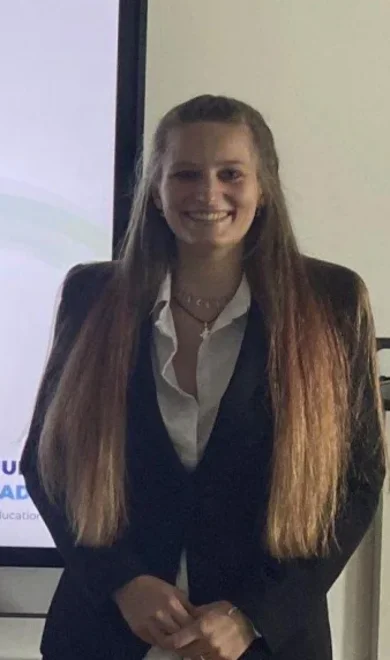
These careers are open to you after specialising in Intelligent Systems & Mobility
The combination of mechatronics, data analysis and artificial intelligence opens up a wide range of career paths for you – for example, in the automotive and mobility industries, energy technology, automation, or in research and development.
Contact & personal advice
Content
To make sure no questions remain unanswered, please feel free to contact us!
-
Prof. (FH) Dipl.-Ing. Wolfgang Haindl
head of programme
-
Dipl.-Ing. Dr. Markus Hochrainer, MSc
Head of Specialisation
-
Contact details for prospective students

