Study with me – podcast!

How can new insights be gained from biological data? On the part-time Master’s programme in Bio Data Science at HWN Tulln (formerly FHWN), you’ll combine biology with Informatics, biostatistics and machine learning/AI. You will analyse biomedical data using modern omics technologies and gain practical preparation for roles in biotechnology, healthcare, research and industry. You do not need any programming skills to start the programme.

New!
Academic degree
Master of Science in Natural Sciences (MSc)
Duration
4 semesters (120 ECTS)
Organisation
extra-occupational
Location
HWN Tulln
Language
English
Start
3 September 2027
Friday & Saturday, 8.15 am–8.00 pm | up to 50 per cent online | at least 5 face-to-face sessions per month
Still have questions about your studies?
Feel free to ask us a question or arrange a personal consultation.
On the Master’s programme in Bio Data Science, you will work with biological data, from its generation in the laboratory through to processing, statistical analysis and biological interpretation. You will learn Python and R, Linux and shell scripting from scratch, work with omics technologies and develop methods for analysing large datasets.
You analyse data from genomics, transcriptomics, metagenomics, proteomics and metabolomics. To do this, you process sequencing and mass spectrometry data and integrate different types of data.
You’ll learn Python, R and the Linux command line. You’ll then develop programmes and reproducible workflows to process, analyse and visualise large datasets.
You use hypothesis testing, multivariate analyses such as PCA and clustering methods, as well as mathematical models, to investigate biological processes and critically evaluate the results.
You use classification, clustering and dimensionality reduction, identify patterns in biological data and evaluate predictive models using appropriate metrics.
You will analyse three-dimensional structures of biomolecules, use AI-assisted protein structure prediction and carry out molecular simulations.
You will learn how to design relational databases and use them with SQL, as well as how to efficiently structure, store and query biological data.
You’ll combine biology, Informatics, statistics and data science in case studies, biological networks and high-throughput data.
The curriculum is currently being developed and may be subject to change before the programme begins in the 2027/28 winter semester. For further information, please see our contact details below.
Study with me – podcast!
“I particularly liked how practical the course was – it felt as though we had far more project work than exams, which I found very useful in preparing for the world of work.”
FAQs answered!
"My degree course was the perfect springboard for me to now tackle data-driven problems independently in a practical setting."
“I was really impressed by how the degree programme combines modern data analysis with scientific knowledge to gain valuable insights from biological data.”
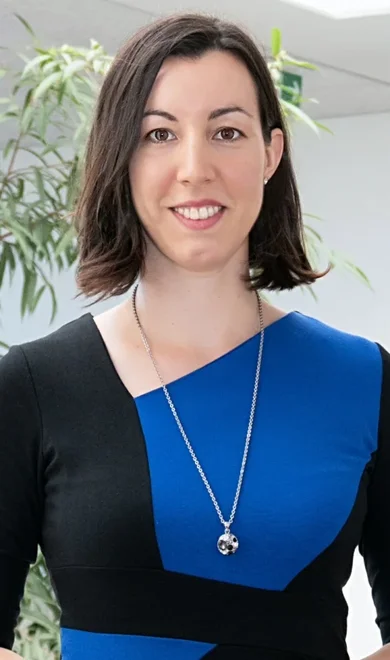
Would you like to apply for the Master’s in Bio Data Science at HWN? Here you can find out what entry requirements you need to meet, how the admissions process works and what documents you’ll need. You can apply online via our application portal. If you have any questions about the programme or your application, either before or during the application process, Michael Grühbaum will be happy to help.
You can find the current application deadlines at the top of the Key Facts section under ‘Programme structure, application deadlines & costs’.
To receive admissions to the Master’s programme in Bio Data Science, you must meet one of the following entry requirements**:
Good to know: Are you still missing some of the entry requirements? Please get in touch with us as soon as possible so that we can organise supplementary courses for you. To help you prepare, we also offer a free, one-week summer school at HWN Tulln. You do not need any programming experience to start the programme.
**The entry requirements are currently being revised and may change over the coming months. For further information, please see our contact details below.
You can apply online via the application portal. You can register using your email address or log in using ID Austria. The application portal will guide you through the application process and you can check the status of your application at any time.
Submit your application
Log in to the application portal, complete your application and upload the required documents. With ID Austria, any data already available can be imported, so you only need to add any missing details and documents.
Good to know: You don’t have to complete your application in one go: your entries are saved, and you can pause at any time, continue later and amend your details before finally submitting your application.
If you are due to graduate shortly, conditional admission is possible. You must then submit proof of this by the end of October at the latest.
Review of your documents
We’ll check whether you meet the entry requirements and whether your documents are complete. If any documents are missing, you can submit them via the application portal.
Online admissions interview
If you meet the requirements, we will invite you to an online admissions interview with the head of programme. During this interview, we would like to get to know you and your motivation for the programme and discuss your prior knowledge. Of course, you will also have the opportunity to ask any questions you may have.
Admission decision
Once the admissions process is complete, you will receive the decision by email and via the application portal.
Offer & Start of Studies
Once you have been offered a place, you will sign your educational agreement online via the application portal and pay the tuition fees and the ÖH contribution for the first semester.
You will usually need the following documents for your application:
Tip: You can also log in to the application portal using ID Austria. This allows any existing data to be imported, which simplifies your application.
You can see exactly which documents you need to upload directly in the application portal. You can submit any missing documents later if necessary.
Have you already completed a vocational training programme or undertaken university-level study? Whether these can be recognised as part of your degree will be assessed on a case-by-case basis at the start of your degree. There is no automatic recognition.
If you obtained your school or university qualification abroad, there may be additional requirements for your application to HWN.
You should therefore find out well in advance about the language and subject-specific entry requirements for your chosen study programme, and check with the relevant authorities regarding the current entry and residence regulations in Austria. Please also note that translations and certified copies of your documents may be required.
Important: Your foreign academic qualifications will only be assessed on a case-by-case basis once you have submitted your application and – where required – paid the deposit in accordance with Section 4(5a) of the Foreigners Act (FHG). It is not possible to assess your documents in advance. Further information on the costs involved can be found in our Tuition Fees and Charges Regulations. (Link – Download Centre)
Please note: For applicants from third countries who require a visa or a residence permit, the earlier application deadline at the end of March applies. If this does not apply to you, we nevertheless recommend that you submit your application by the end of March at the latest to allow sufficient time for your documents to be assessed. However, the application deadlines for your chosen study programme also apply.
At HWN Tulln, you’ll study at Technopol Tulln, surrounded by research institutions and companies specialising in life sciences and biotechnology. You will generate biological data in the laboratories and then analyse it using bioinformatics. You can reach Tulln by train in around 25 minutes from Vienna Heiligenstadt station.

With a Master’s in Bio Data Science, you can work at the intersection of biology, Informatics and data analysis: for example, analysing data, applying machine learning models or programming software for data analysis. Potential career paths include research, biotechnology, the pharmaceutical industry, medical diagnostics and data-driven companies.
With a Master’s degree, you can apply for a PhD programme at a university in Switzerland or abroad.
In your day-to-day work, you will, for example, be involved in:
preparing and analysing genomics, transcriptomics, proteomics and metabolomics data
Applying and evaluating machine learning models for (biological) research questions
Programming reproducible analysis workflows in Python and R
Visualising results and presenting them to a specialist audience
Methodically planning and supporting research projects

In addition to internal lecturers, external experts from biotechnology and software companies, as well as from Austrian and European universities, also teach on the programme.
"In the life sciences today, programming is no longer a luxury, but a tool just like a pipette or a microscope. It changes the questions you can ask of your data."
“Bio Data Science combines an understanding of the natural sciences with modern analytical methods and guides the process from biological sample to biological information.”
Biometric data analysis using state-of-the-art methods – this is the only way to ensure that students become competitive experts.

Prof. Gatto heads the Department of Computational Biology and Bioinformatics at the de Duve Institute and is a university professor at UCLouvain. His team develops and utilises statistical learning methods and…
software tools for the analysis of high-dimensional biological data.
Prof. Gatto is a strong advocate of Open Science and attaches particular importance to reproducible research and openly accessible programme code. His research focuses on quantitative mass spectrometry, in particular spatial proteomics and single-cell proteomics.

Ulrik Sundekilde from the Department of Food Science – Differentiated & Biofunctional Foods at Aarhus University uses advanced metabolomics methods to identify…
…micronutrients in food, as well as the resulting changes in metabolites in body fluids and biological samples (blood, urine, stool and breast milk).
Furthermore, he combines the metabolic profiles obtained with data from high-throughput sequencing (Next Generation Sequencing) to investigate changes in individual bacteria in the human gastrointestinal tract caused by diet.

Günter Brader is a group leader at the Austrian Institute of Technology (AIT)...
His areas of research include biocontrol and the use of microorganisms in agriculture, comparative (meta-)genomic analyses of bacteria, and research into the application of bacterial resources.
For our scientific research projects and collaborations, we work with several renowned partners, including the Medical University of Vienna, the University of Veterinary Medicine, Vienna, and other study programmes at Wiener Neustadt University of Applied Sciences. You will write your master’s thesis on a research topic of your own choosing, either in Austria or abroad. The study programme is currently participating in the ‘Pre-clinical Ion Beam Research’ (PAIR) doctoral programme, which focuses on the development of innovative cancer therapies.

The programme equips graduates to tackle a wide range of socially relevant challenges with significant impact across the entire spectrum of the life sciences. Topics covered in our graduates’ master’s theses include, for example:
Effect of the secretome of osteoarthritis chondrocytes on the gene expression of PC12 cells
Building a Snakemake pipeline for the metagenomic recovery of giant viruses
Proteomic analysis of polyester degradation in carnivorous plants
Estimation of optimal gas composition for underground methanogenesis
Implementation of a web application for the manufacture of medicines in Austrian pharmacies
The origins of paired appendages in tetrapods: clonal expansion of transposons and the emergence of cis-regulatory elements
Identification of variations in the human microbiome at different body sites: A machine learning approach to infer body sites from microbial sequencing data
Getting a Sheepskin: A Comparative Study of Using GAM and CNN to Date Historical Parchment Using NIR Spectral Data
head of programme
Contact details for prospective students
You’ll develop your programming skills step by step – from the basics of Python and R and working with the Linux shell, through algorithms and data structures, to object-oriented programming and machine learning. In the process, you’ll learn to use databases, further develop software and apply specialised tools for quality management in data analysis. This will enable you to develop sound, practical knowledge that you can apply in various areas of Bio Data Science.
Yes, the Master’s in Bio Data Science is designed to be studied part-time. Courses take place on Fridays and Saturdays. Up to 50 per cent of the teaching takes place online. In addition, there are flexible distance-learning components that allow you to work through the course material at your own pace. You’ll study in small cohorts and benefit from personalised supervision.
To be eligible for admission, you must have completed a Bachelor’s or Diplom degree in the natural sciences, engineering, health sciences or a technical field (Computer Science or statistics)*. As an alternative to a relevant degree, relevant experience in the subjects of chemistry, analytics, microbiology or molecular biology is accepted. Programming experience is not a prerequisite. To ensure they are fully prepared for the programme, first-year students take part in a free summer school.
*subject to review
Yes, you can also write your master’s thesis whilst studying abroad. It is worth 27 ECTS credits and marks the completion of your degree. In it, you will explore an individual academic research question relating to data analysis and interpret the results. The programme also offers the opportunity to spend a semester abroad.
Upon completion of the Master’s in Bio Data Science, you will be awarded the academic degree of Master of Science in Natural Sciences, abbreviated to MSc. With this qualification, you can also go on to undertake a PhD at a university in Germany or abroad.
The Biotech Campus Tulln is easily accessible: from Vienna, you can reach the site in around 25 minutes. Tulln has excellent motorway and rail links. Tulln railway station is about a 10-minute walk from the university of applied sciences. You’ll be studying in a research-oriented environment specialising in life sciences and biotechnology. On campus, you’ll work in small groups, with personalised supervision and direct feedback from your lecturers.