
A new approach to distance learning in Austria: learn online, consolidate your knowledge on campus
Distance learning in Austria – what does that actually mean?
A distance learning programme allows you to study flexibly and from anywhere, alongside work or family commitments. Depending on the model, the level of personal responsibility, supervision and face-to-face interaction varies significantly. Alongside traditional distance learning programmes, hybrid formats such as blended learning are therefore becoming increasingly popular.
In this article, you’ll find out:
- what a distance learning or online degree programme in Austria can offer and where its limitations lie
- how the Blended Learning+ model works at the Wieselburg campus
- why interaction is so important during your studies
- who this form of study is particularly suited to
A brief overview: Flexible study models today
Today, there are more ways to complete a degree than ever before: on-campus study, online study, distance learning, blended learning – each model has its own advantages and disadvantages. The key question is not just how flexible a model is, but: what sort of learner are you?
| On-campus study | Distance learning / Online study | |
|---|---|---|
| Advantages |
|
|
| Disadvantages |
|
|
| This suits you if … | … structure, networking and direct contact are important to you | … you want to study flexibly and independently |
A traditional distance-learning programme offers real freedom: you study when and where it suits you and can better balance your studies, career and family life. At the same time, the responsibility for structure and your study routine lies more with you, and informal interaction with fellow students does not happen automatically.
So the question remains: is there a model that combines the strengths of both worlds?
More than just an online or distance learning programme: Blended Learning+
The Blended Learning+ model at the Wieselburg Campus of the University of Applied Sciences Wiener Neustadt combines the best of online and face-to-face teaching: flexibility for everyday life, scheduled attendance times for structure, and genuine interaction for motivation. All this within a clear, recurring rhythm.
This makes it possible to realistically balance studies, work and family life without having to sacrifice personal contact.
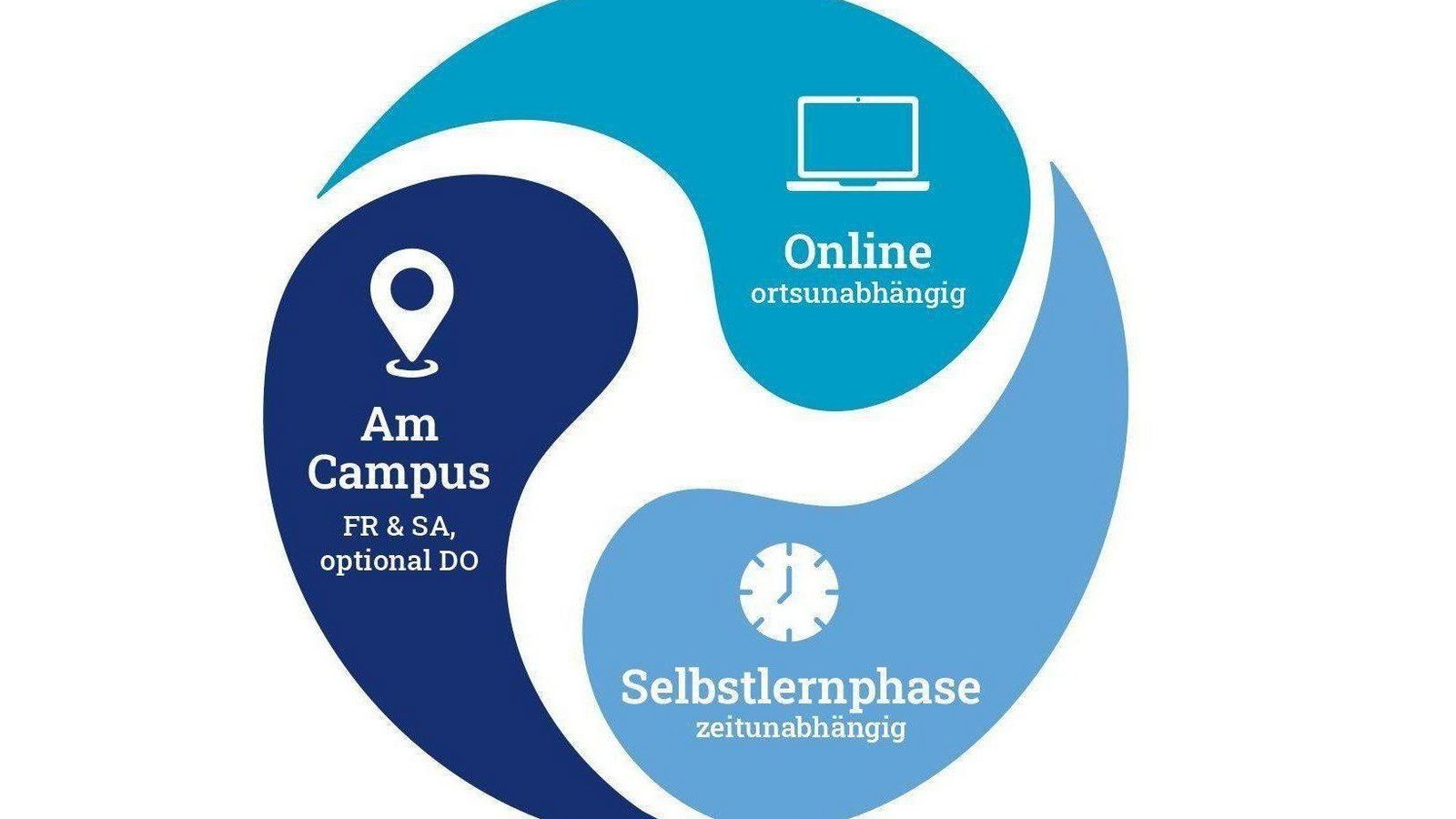
What this means in practice:
- Flexible self-study periods, during which you can organise your study time as you wish. Structured materials and clear tasks help you to keep track of things and stay on track.
- Online courses with fixed dates, which you can attend from anywhere. This allows you to stay in touch with lecturers and fellow students – without having to travel.
- Targeted, concentrated periods of on-campus attendance, offering opportunities for personal interaction, discussions and practical consolidation.
- A clear, recurring study routine that effectively combines these three phases.
This creates a structure that provides you with guidance whilst allowing enough flexibility to integrate your studies seamlessly into your everyday life.

“Flexibility alone does not make for a good degree programme. What matters is striking the right balance: enough freedom to fit your studies into your daily life, whilst at the same time having a clear structure that provides guidance and helps you stay on track.”
Who is this study model particularly well suited to?
The Blended Learning+ model is ideal for anyone who wants more than just a purely distance-learning programme. It is particularly suitable for:
- Working professionals
You want to develop your skills without giving up your job.
- Bachelor’s graduates
You’re looking for a Master’s programme that fits in well with your next career move.
- People looking to change career direction
You want to change your professional focus, but need structure and support to do so.
- Anyone who deliberately doesn’t want to study alone
If motivation, networking and personal contact are important to you, this model is a strong alternative to traditional online or distance learning.
It is precisely in these life situations that it becomes clear just how crucial a study model is that not only sounds good, but can actually be put into practice in everyday life.
The Balanced Study Rhythm in the Blended Learning+ model therefore combines precisely what is often neglected in everyday life:
- A clear structure for planning and guidance
- Flexible learning phases that you can adapt to your daily routine
- Regular interaction through online and face-to-face sessions
This way, you stay well organised, can plan your studies reliably and still feel supported along the way.

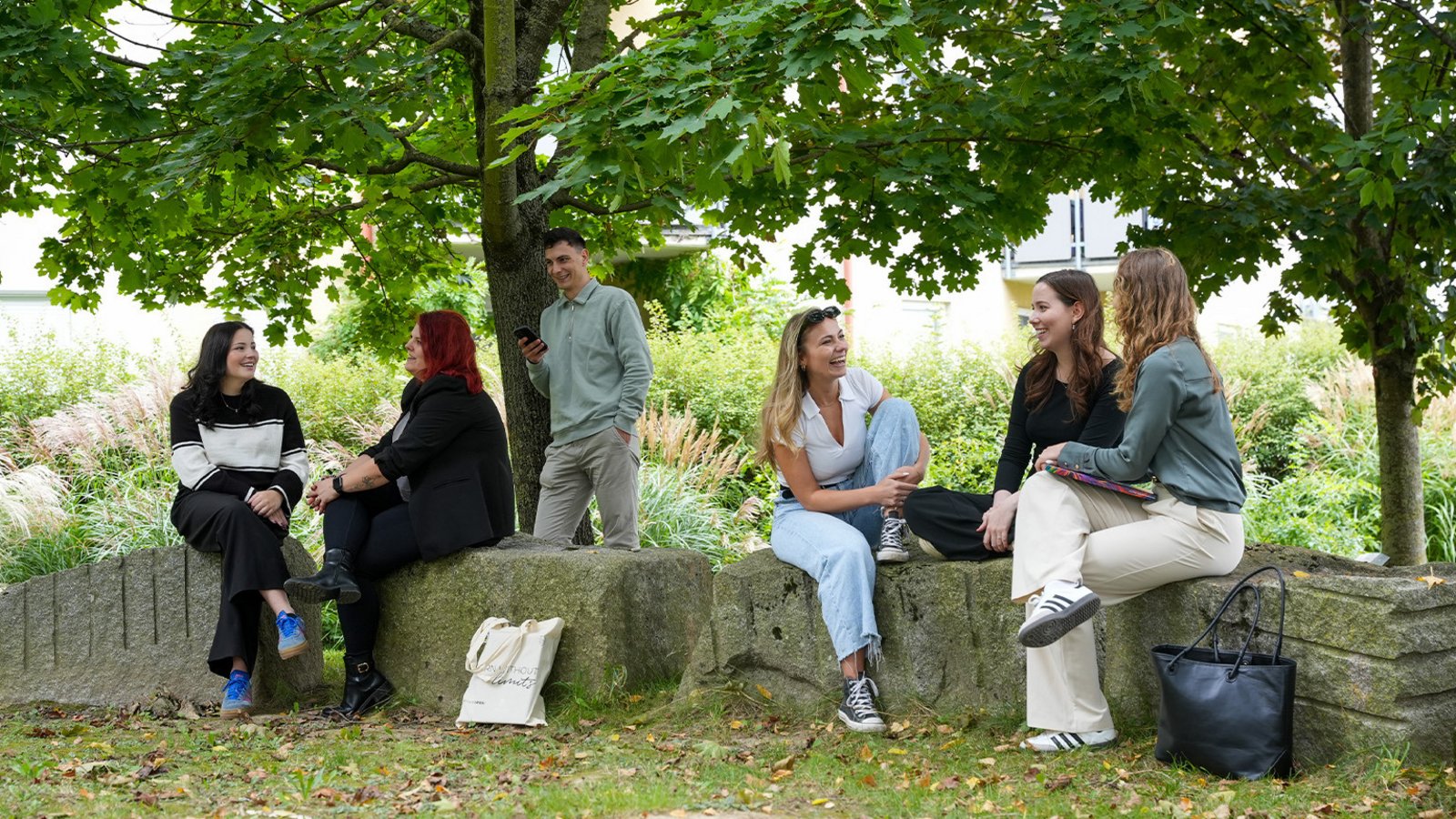
"It really helps me to go over topics I’ve worked on myself with others. That way, I consolidate what I’ve learnt, stay focused and still have plenty of fun."
Why learning through exchange often works better
Purely online study offers a great deal of freedom – but often little sense of connection.
The Blended Learning+ model deliberately places the emphasis elsewhere: here, learning takes place not only individually, but also collaboratively.
It is particularly during the face-to-face phases that the difference becomes apparent:
- Direct contact with lecturers, where questions can be clarified immediately and the subject matter explored in greater depth in a way that is easy to understand.
- Discussions and group work that open up new perspectives and broaden understanding.
- Spontaneous exchanges with fellow students, which often provide precisely the inspiration or motivation that is lacking when studying alone.
For many students, it is precisely this personal interaction that is crucial – not only in terms of academic knowledge, but also for motivation and perseverance throughout their studies.
Our Master’s study programmes in the Blended Learning+ format
At the Wieselburg campus, the model is currently being implemented in two Master’s study programmes:
Both programmes combine up-to-date content with a structure that can be realistically integrated into your everyday life.
Would you like to know exactly how the model is structured and how a semester works? Then take a look at the Blended Learning+ concept at the Wieselburg Campus.
Conclusion: Distance learning – or is there more to it?
Nowadays, a degree programme needs to offer more than just the transfer of knowledge. It should fit into your life whilst helping you to stay motivated.
This is exactly where the Blended Learning+ model comes in: with a clear structure, flexible learning phases and genuine interaction.
Still unsure whether this study model is right for you?
Our student advisory service will be happy to help!